




Olivia M
2 hours ago
At night my space used to feel empty and cold. Now it feels warm like somewhere I actually want to stay


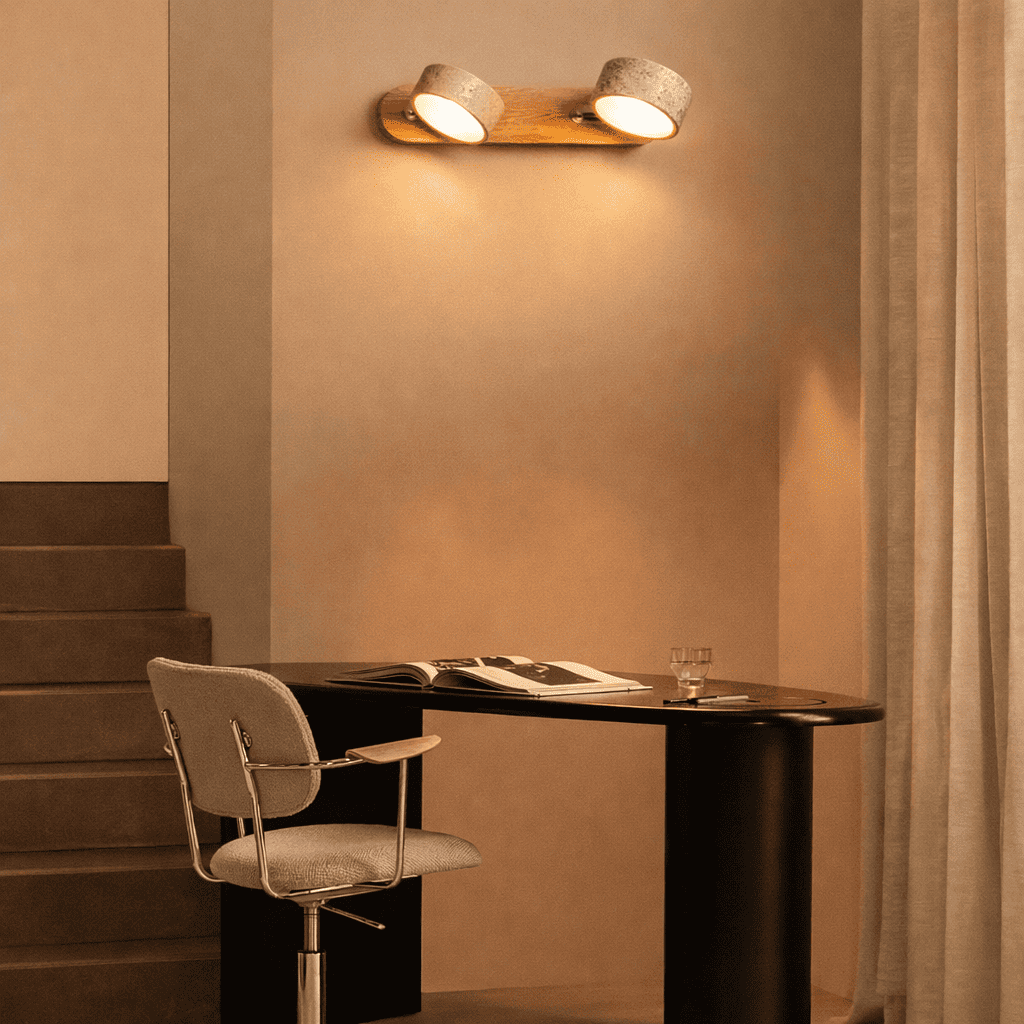
🏆 As seen in select design publications, a softly diffused light in stone and wood — quiet warmth, balanced presence, lasting calm, thoughtfully engineered to reduce energy use by up to 90% while offering a significantly extended lifespan for enduring, refined illumination.
 100% Natural Stone
 100% Natural Wood
 95% Handmade with Intention
Hurry up, only 4 items left in stock.
Couldn't load pickup availability
Light, held low
Scent, barely there


| 12,000+ Happy Homes | Build Your Calm Ritual


Organic pores and tonal variation create a surface that feels grounded, tactile, and quietly luxurious.

Warm wood detailing adds depth and balance, reinforcing the natural character of the design.

Visible texture and subtle variation give each piece a finish that feels real, refined, and more trustworthy.

Stone and wood bring visual warmth and enduring appeal to interiors designed with intention.
Modern interiors spent years chasing brightness, perfection, and visual minimalism. In 2026, the movement is shifting toward something far more human: softer light, natural materials, emotional atmosphere, and homes designed to calm the nervous system rather than overstimulate it.
The problem with most modern homes is not that they are unfinished. It is that they no longer understand how human beings are meant to feel at night.
There is a quiet mistake many people make when designing a home. They believe a room feels unfinished because it needs more furniture, more decoration, more color, more objects, or more styling. So they add another vase, another framed print, another throw blanket, another shelf, another small decorative piece that looks beautiful for a moment, then somehow disappears into the room without changing how the room actually feels.
And still, at night, something is missing.
The room is furnished. The room is clean. The room may even be beautiful. But it does not feel complete. It does not soften the body. It does not quiet the mind. It does not create that rare feeling of returning home and slowly becoming yourself again.
This is where most people misunderstand interior design.
A home is not experienced through objects first. It is experienced through light.
Before the eye understands shape, it responds to brightness. Before the mind reads color, it reacts to warmth or coldness. Before a person notices the sofa, the table, the artwork, or the walls, the nervous system has already decided whether the room feels safe, harsh, calm, exposed, warm, or lifeless.
That is not decoration. That is biology.
For thousands of years, human beings lived inside the rhythm of natural light. Morning arrived slowly. Midday became bright and active. Evening turned warmer, lower, and softer. Night was never flooded with cold white brightness. It was shaped by fire, moonlight, candle glow, and the muted reflections of earth, stone, wood, and water.
The body still remembers this rhythm, even if modern life has forgotten it.
Today, many homes are lit against the natural order of human rest. Bright ceiling lights remain on late into the evening. Cold LEDs turn bedrooms into workspaces. Plastic fixtures scatter light without depth. Glossy surfaces reflect brightness instead of softening it. Screens keep the brain awake long after the day should have ended.
People call this modern living.
The body experiences it as quiet stress.
This is why a room can look beautiful in the daytime and feel completely wrong at night. Daylight does the emotional work for us. It reveals texture, softens edges, gives depth to corners, and makes ordinary materials feel alive. But once daylight fades, the room must depend on artificial light. And this is where many interiors fail.
The furniture does not change. The wall color does not change. The layout does not change. Yet the feeling collapses. The room becomes flatter. The shadows become harder. The air feels colder. The evening loses softness.
Most people do not realize the problem is lighting. They think the room needs more decor.
But the truth is simpler and more powerful: the room does not need more things. It needs a better atmosphere.
And atmosphere is created when light meets material.
This is the reason natural stone lighting feels fundamentally different from ordinary lighting. Plastic can hold a bulb. Metal can direct brightness. Glass can expose light.
But natural stone transforms light.
Travertine, limestone, alabaster, and warm mineral materials do something deeply human: they slow the light down. They soften it. They absorb part of its sharpness. They allow the glow to move through pores, veins, texture, and natural color variation before it reaches the room.
The result is not simply illumination. It is emotional temperature.
A softer wall. A calmer corner. A warmer bedroom. A dining space that feels slower. A hallway that no longer feels empty after dark.
This is why natural stone lighting is becoming one of the most important interior movements from 2026 onward. Not because people suddenly want stone lamps. Not because travertine became another seasonal trend.
People are beginning to recognize a deeper need: they do not want homes that are merely brighter. They want homes that help them return to themselves.
In a world of screens, artificial surfaces, fast furniture, harsh LEDs, disposable decor, and interiors designed more for images than for living, natural stone lighting represents something almost ancient. A return to earth. A return to warmth. A return to materials that do not feel temporary. A return to light that follows the rhythm of the body instead of fighting it.
Travertine carries this feeling with unusual strength. It is not a manufactured texture pretending to be natural. It is a stone formed through mineral deposits, water, pressure, and time. Its pores, veins, tonal shifts, and irregular surfaces are not decorative effects. They are records of formation. Every piece holds a quiet memory of nature, and no two pieces are ever exactly the same.
That difference matters.
Modern interiors are increasingly filled with repeated patterns, synthetic panels, resin imitations, printed stone effects, and mass-produced surfaces that appear convincing in photographs but feel emotionally thin in real life. The human eye is more intelligent than marketing. It recognizes repetition. It senses artificial depth. It feels the difference between something shaped by nature and something produced to imitate it.
This is why natural stone lighting carries a value that is difficult to fake. It does not only look beautiful. It feels grounded. It brings weight, silence, texture, and permanence into the room. A travertine wall light, a warm stone table lamp, or a natural mineral pendant does not behave like an ordinary fixture. Even when turned off, it belongs to the space. When turned on, it changes the emotional state of the room.
When off, it is material presence. When on, it is atmosphere.
This is also why beige, ivory, sand, limestone, honey, and warm mineral tones are becoming so important in modern interiors. The real trend is not simply a color.
It is a mood.
Natural beige is not flat. It contains warmth, shadow, softness, and movement. It holds daylight gently in the morning and becomes deeper under warm evening light. It does not fight the room. It settles into it.
Bad beige is boring. Natural beige is emotional.
This is the territory where Florona’s product philosophy belongs. Florona should not be understood as another lighting store selling stone fixtures. That position is too small, too replaceable, and frankly too easy for the internet to flatten into another product category.
Florona’s real direction is more precise: calm lighting for warm interiors.
The product is not simply a lamp.
It is the moment the room changes.
A Florona stone wall light should make a bedroom feel less exposed at night. A travertine pendant should make a dining table feel warmer, slower, and more intimate. A stone table lamp should turn a quiet corner into a place where the body naturally wants to pause. A warm wall sconce should soften a hallway that once felt empty and cold.
The customer is not only buying material, shape, or brightness. They are buying the transformation from harsh to soft, from flat to atmospheric, from decorated to composed, from room to retreat.
This is the emotional core of stone lighting.
Once a customer understands this, the product becomes more than beautiful. It becomes necessary.
The strongest design movements do not come from objects. They come from unresolved problems in the culture.
Stone lighting is rising because modern life has created too much sensory pressure. People are overstimulated. Homes feel too artificial. Fast decor feels disposable. Cold lighting feels uncomfortable. Screen fatigue is increasing. Interiors have become visually impressive but emotionally restless.
Natural stone lighting answers this problem with something simple and ancient: warmth, texture, softness, shadow, and the feeling of being grounded again.
This is not nostalgia for the past. It is not about turning modern homes into old houses. It is about recovering the emotional wisdom that older spaces often had naturally. The old home was not perfect, but it often understood atmosphere better than many modern interiors do. It had softer light, deeper shadows, natural materials, and a slower relationship with evening.
It allowed the day to end.
That may be one of the most overlooked luxuries of modern life: a home that allows the day to end.
Because the old definition of luxury was more. More shine. More scale. More brightness. More statement. More obvious expense.
But the new luxury is restraint.
A calmer wall. A softer glow. A natural material. A room that does not demand attention. A light that makes the evening feel slower.
This is why natural stone lighting will last beyond 2026. It is not dependent on a trend color, a viral interior style, or a temporary social media aesthetic. Travertine was relevant in ancient architecture. Stone has always belonged to temples, courtyards, old-world homes, Mediterranean interiors, quiet hotels, and timeless spaces of shelter.
The form may evolve, but the material language remains.
It feels current without feeling temporary.
And in an age where so many products are designed to be replaced, anything that feels lasting becomes emotionally valuable.
This is where Florona can become different. Not by shouting that the products are premium. Not by copying the loud language of luxury. Not by selling brightness as if more light automatically means better living.
Florona should stand for a quieter truth: the most meaningful homes are not the ones filled with the most objects, but the ones that know how to hold you after dark.
That is the future of lighting.
Not stronger light. Not colder light. Not more perfect light.
More human light.
Light that understands texture. Light that respects shadow. Light that works with the body instead of against it. Light that brings nature back into the room without turning the home into a rustic imitation of the past. Light that makes modern living feel softer, warmer, and more emotionally complete.
Natural stone lighting is not simply a design trend for 2026.
It is a correction.
A correction from cold to warm. From synthetic to natural. From decoration to atmosphere. From brightness to calm. From spaces made to be seen to homes made to be felt.
And once that is understood, lighting stops being the final detail of a room.